

Abrahamic Theistic Origins Project (ATOP)

Based on a generous grant from the Templeton Religion Trust and hosted by Wycliffe Hall (Oxford), the Abrahamic Theistic Origins Project (ATOP) explores the question of how the Abrahamic faiths (Judaism, Christianity, Islam) and the evolutionary sciences meet.
We are bringing together thinkers from those faith traditions—scientists, theologians, scripture scholars, and philosophers—to learn from each other about how scientists take their respective creation theologies into consideration, and theologians the evolutionary science. What insights can be drawn from understanding how each field encounters the other? How can various creation traditions inform the evolutionary sciences and vice versa?
Why evolutionary science and creation?
The sciences and Abrahamic faiths uniquely share an unexpected cultural difficulty today: lack of trust in their respective explanations of life. These matters of trust often center upon a religion's relationship with scientific explanation, and specifically their explanations and theologies related to creation. Many people do not trust creation theologies to be coherent with science; others do not trust science as a consistently truth-producing process.
This need not be a zero sum game with science winning when religion loses or vice versa. Rather both science and religion could gain deeper public trust by promoting mutual respect for both fields.
Why the Abrahamic faiths?
Jews, Christians, and Muslims can benefit from each other in convivial environments where their differences become opportunities to think afresh about their own traditions. This vigorous form of interaction between silos allows for co-learning through deep difference rather than merely finding mutual points of accord.
Congregations can also benefit from engaging in demonstrations of such epistemic humility and excitement about coming to understand their own faith better through encounters with other faith.
What are we doing?
These transdisciplinary interactions across faith traditions create a unique form of epistemic humility and openness to learning from others and about our own disciplines and faiths - similar to the pupil who, by learning Spanish grammar, discovered the wonderous functions of English grammar.
Using concentrated sessions of multi-disciplinary co-learning (i.e. workshops, book clubs, etc.), the ATOP is creating a community of scholars who will make new colleagues and friends between their silos and share the fruits of their learning in their wider faith communities (i.e., digital presence, popular publishing, congregational events, public lectures, etc.). The ATOP focuses on nurturing this cohort of scholars (to include some scholar-clerics) with an end goal of including clerics and laypersons in similar co-learning.
Who's who

Dr Dru Johnson
Templeton Senior Research Fellow, Wycliffe Hall

Dr Rachel S.A. Pear
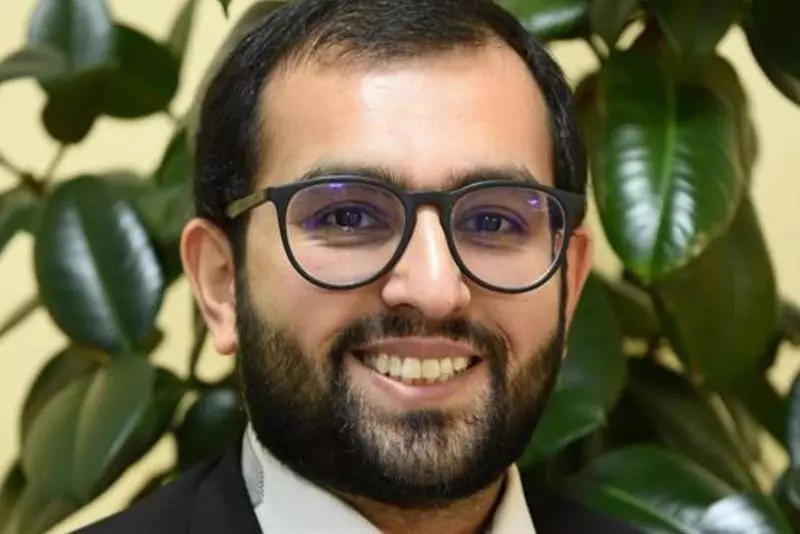
Dr Shoaib Malik
Lecturer, University of Edinburgh